

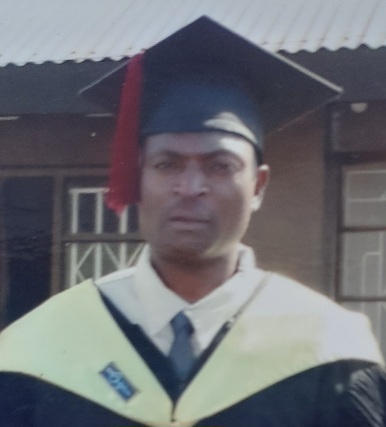
Dr. John Chegenye
Background
Kenya produces too few PhDs each year relative to workforce and research needs. A British Council/DAAD study found that only about 40% of academic staff in older Kenyan universities hold PhDs. This fraction is lower in newer institutions — especially in STEM fields where it is under 30%. This shows that academic staffing in universities remains PhD-constrained.
Ministry of Education data indicate that the number of students enrolling in PhD programmes (combined with Master’s) reached 34,403 by June 2023. This represented a 20.5% increase compared with earlier years.
Another report by CUE shows that around 4,780 students were enrolled in PhDs in 2020. This declined to 4,150 by 2023, indicating that while overall postgraduate enrolment remains high, PhD enrolment specifically has been under pressure in the early 2020s.
The Kenya National Bureau of Statistics (KNBS) Economic Survey (2024) data show that there are doctoral and Master’s holders working beyond higher education. As of December 2023, 2,060 primary school teachers and 6,224 secondaryschool teachers had Master’s and PhDs.
According to Kenya’s Educational Statistical Yearbook for 2022/23, the number of academic staff with PhDs in public universities increased from 976 in 2020/21 to 1,105 in 2022/23. This means about 25% of higher education academic staff held a PhD by 2022/23 — reflecting growth but also showing that doctoral qualification remains the minority status among faculty.
It also shows that Kenya’s share of doctoral graduates in the academic system (around 1–2% of total students in years past) is far below the level needed to sustain research capacity and replace faculty as retirements occur. Hence there is need for more PhD qualifications!
Global PhD Completion Trend; the Dilemma in Kenya!
Across the globe, doctoral programmes are designed to be completed within three to six years. In Kenya, however, PhD completion commonly extends far beyond the prescribed duration. Where is the challenge?
This article argues that while financial and personal factors are often blamed, weak supervision systems, inefficient university administration, and escalating doctoral costs are the primary institutional drivers of prolonged completion. Comparatively, supervision failures and bureaucratic delays not only lengthen PhD duration but also significantly increase the financial burden on doctoral candidates.
Global Context: How Long Should a PhD Take?
Internationally, doctoral education follows relatively predictable timelines: in the United Kingdom & Europe it takes 3–4 years, Australia 3–4 years, United States & Canada: 5–7 years
These systems rely on structured supervision, milestone-based progression, and efficient graduate administration to ensure timely completion (OECD, 2019).
In contrast, African doctoral programmes often average 6–8 years, with high non-completion rates. Kenya reflects this pattern, despite having regulations that mirror global standards.
The Kenyan Reality: Regulations vs Practice
Kenyan universities formally prescribe doctoral completion within 3–5 years (full-time): University of Nairobi (UoN) has Minimum of 3.5 years, and Maximum of 7–7.5 years. Kenyatta University (KU), minimum 3 years, Maximum 4–6 years. JKUAT expected completion is 3–5 years, while Egerton, Moi, University of Eldoret have a similar regulatory limits
However, actual completion frequently exceeds 6–10 years, exposing a systemic gap between regulation and implementation.
Supervision as the Central Bottleneck
This can be contextualized into:
1. Supervisor Shortages and Overload
Most Kenyan universities face an acute shortage of qualified PhD supervisors. Senior academics often supervise many doctoral candidates while also handling teaching, administration, and consultancy work. The result is infrequent supervision meetings, delayed feedback, and stalled research progress.
2.Quality of Supervision and Training Gaps
Doctoral supervision in Kenya can be largely described as ‘unprofessionalized.’ Many supervisors receive no formal training in doctoral mentorship, leading to unclear expectations, inconsistent standards, and repeated revisions that extend candidature unnecessarily.
3.Power Dynamics and Weak Grievance Mechanisms
Strong power asymmetries discourage doctoral candidates from challenging neglectful supervision. Grievance mechanisms exist on paper but are often inaccessible, slow, or culturally discouraged, resulting in silent delays and prolonged registration.
4. Absence of Supervisor Accountability
Students are closely monitored through progress reports, yet supervisors are rarely evaluated on feedback timeliness, completion rates, or student outcomes. This imbalance weakens institutional incentives for effective supervision.
Administrative Failures and Bureaucratic Delays
Administration is often the key to progress or lack of it. How?
1. Fragmented Graduate Administration
Doctoral administration is often dispersed across departments, faculties, graduate schools, and registrars’ offices. This fragmentation causes lost documentation, duplicated approvals, and inconsistent guidance.
2. Ethics, Permits, and Research Approvals
Delays in ethics approvals, NACOSTI permits, and institutional clearances can halt research for months, particularly in health and social science disciplines.
3. External Examination Delays
The requirement for external examiners remains one of the longest bottlenecks. Identifying examiners, securing reports, and scheduling defenses can take over a year in some cases.
4. Policy–Practice Disconnect
While universities publish clear rules on maximum candidature periods, enforcement is inconsistent. Extensions are routinely granted without structured remediation, turning maximum durations into symbolic limits.
The Hidden Cost of Prolonged PhD Completion in Kenya
1. Average Cost of a PhD Programme
The financial cost of a PhD in Kenya varies by institution and mode of study, but available data shows the following approximate ranges:
• Public universities: Annual tuition and statutory fees typically range between KES 130,000 and KES 336,600.
Over a realistic completion period of 6–7+ years, total tuition-related costs often reach KES 600,000 to over KES 1,200,000.
• Private universities:
Fees are higher and vary widely, with some institutions charging KES 180,000–200,000 per semester.
Total costs frequently exceed KES 1,000,000–1,500,000, especially when programmes extend beyond the minimum period.
2. Non-Tuition Costs
Beyond tuition, doctoral candidates incur: Research and fieldwork expenses, Laboratory and data collection costs, books, software, and stationery, living expenses (housing, transport, food), graduation and clearance fees
These costs are rarely reflected in advertised fee structures and rise sharply as completion timelines extend.
3. Cost–Delay Interaction
Prolonged supervision and administrative delays translate directly into higher financial costs. Each additional year of registration increases tuition payments, living expenses, and opportunity costs, making doctoral delay both an academic and economic problem. A PhD that takes twice as long often costs nearly twice as much.
How Supervision, Administration, and Cost Reinforce Delay
Weak supervision generates repeated extensions and re-registrations. Poor administration allows delays to persist unchecked. Rising costs then force many candidates into part-time work, further slowing progress. This creates a self-reinforcing cycle of delay.
Implications for Kenya’s Higher Education System
Prolonged and costly PhD completion reduces national research output, delays academic staff replacement, discourages doctoral enrolment, weakens global competitiveness, undermines Kenya’s knowledge economy ambitions
What Must Change: Policy and Institutional Reforms
1. Professionalize Doctoral Supervision
This can be done by mandatory supervisor training, capped supervisory loads, linking promotions to doctoral outcomes.
2. Streamline Graduate Administration
Administration can be streamlined by entralized and digitized doctoral management systems, enforcement of timelines for approvals and examination
3. Enforce Dual Accountability
Accountability can be enforced by evaluation of supervisors and administrators alongside students, and setting up transparent grievance and escalation mechanisms
4. Expand Doctoral Funding
Doctoral programmes funding is essential through increased full-time scholarships, teaching-release arrangements, and targeted research grants
9. Conclusion
In Kenya, delayed PhD completion is not primarily a student failure but a systemic institutional problem. Weak supervision, inefficient administration, and escalating costs have turned doctoral study into an open-ended and expensive process. Reforming these systems is essential if Kenya is to strengthen its research capacity and global academic standing.
References (Indicative)
• Cloete, N., Mouton, J., & Sheppard, C. (2015). Doctoral Education in South Africa.
• Halse, C., & Malfroy, J. (2010). Studies in Higher Education.
• OECD. (2019). Education at a Glance.
#Education
#highereducation
#doctoralprogrammes
#universities
#universitiesfunding
#research
Dr. John Chegenye is a Human Resource Management scholar, educator, and consultant specializing in organizational behavior, labor relations, and performance management. He writes on leadership, labor policy, and institutional development.
 ChegzMad Consultancy
Leave a comment