

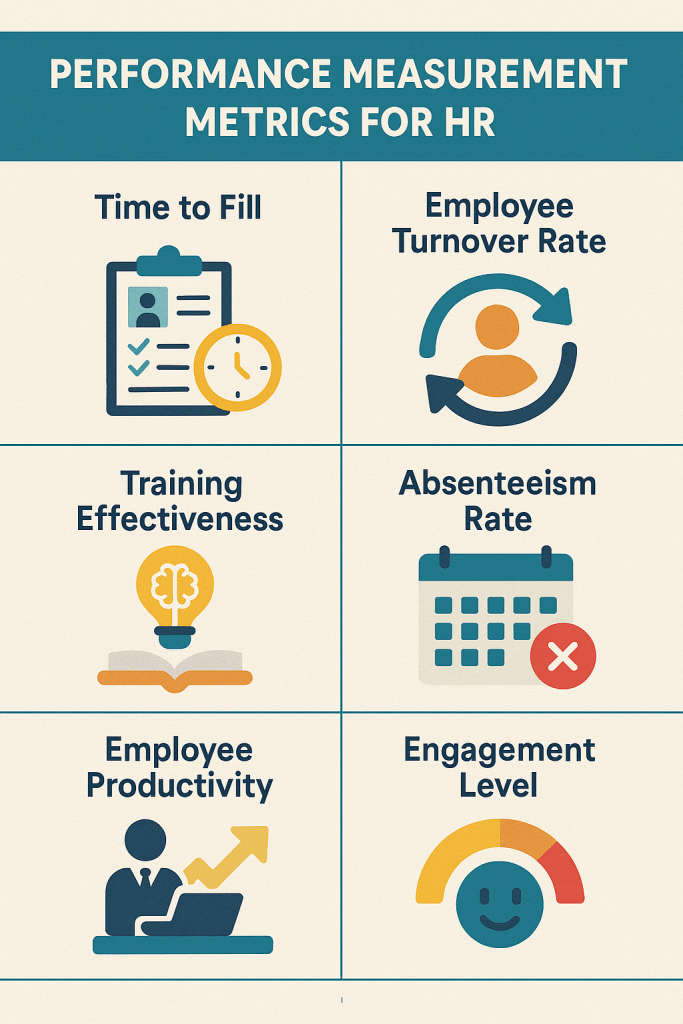
Performance measurement involves collecting, analyzing, and reporting information. This process evaluates how well an individual, team, organization, or system is achieving set goals. It provides evidence of progress (or lack thereof) and helps in making decisions to improve efficiency, effectiveness, and overall outcomes.
Key Features of Performance Measurement
• Goal Alignment
Good performance measurement tool need to manage to compare actual performance against predetermined objectives, standards, or benchmarks.
• Indicators/Measures
A performance measure uses Key Performance Indicators (KPIs) or metrics such as efficiency, quality, timeliness, and customer satisfaction.
• Data Collection
A good performance measure involve use of data. The data can be both quantitative (e.g., sales numbers, production rates) and qualitative (e.g., employee feedback, customer experience) data.
• Analysis & Evaluation
It must be able to identify performance gaps, strengths, and areas of improvement.
• Feedback & Learning
The results of a performance measurement need to be used to inform decision-making, strategy adjustment, and continuous improvement.
Levels of Performance Measurement
Performance measurement can be done at different levels in the organization. These levels are:
• Individual level
Individual level measurement tracks employee contributions (e.g., task completion and competency development).
• Team level
This evaluates group productivity, collaboration, and effectiveness.
• Organizational level
This measures overall results of the organization like financial performance, customer satisfaction, and societal impact.
Performance Measurement Metrics
Metrics important because they are at the heart of performance measurement. Metrics provide the evidence of how performance is progressing. They translate goals and objectives into measurable indicators that can be tracked and compared.
Types of Performance Metrics
Several performance metrics exist. These metrics range from individual, team to organizational level. They include:
1. Financial Metrics
Financial metrics focus on cost, revenue, and profitability. They include:
• Return on Investment (ROI)
• Profit margins
• Cost per unit/service
• Budget variance
2. Productivity & Efficiency Metrics
These metrics measure how well resources like time, money, and labor are used. They include:
• Output per employee
• Cycle time (time taken to complete a process)
• Utilization rate (e.g., machine or staff use)
• Absenteeism rates
3. Quality Metrics
Quality metrics evaluates standards, reliability, and customer satisfaction. They include;
• Error/defect rates
• Service accuracy
• Compliance with standards/regulations
• Customer complaints/returns
4. Customer-Focused Metrics
These metrics assess how well the organization meets customer needs. Their examples are:
• Net Promoter Score (NPS)
• Customer satisfaction index
• Repeat purchase rate
• Customer retention rate
5. Employee Performance Metrics
Employee performance metrics look at individual or group contributions and engagement to overall organizational performance. They include:
• Goal achievement rate (percentage of targets met)
• Training and skill development progress
• Employee engagement survey scores
• Turnover and retention rates
6. Innovation & Growth Metrics
These metrics capture the ability to adapt and improve. Their examples are:
• Number of new products/services launched
• Investment in R&D
• Time-to-market for innovations
• Adoption of new technology
HR Performance Metrics
Human Resource (HR) performance is often measured with HR-specific metrics. These metrics show how effectively people are being managed, developed, and retained. These metrics help align HR practices with organizational goals. The metrics include:
1. Recruitment & Staffing.
They involve:
• Time to Fill
This is the average time taken to hire for a vacancy.
• Cost per Hire
It refers to the total recruitment expenses ÷ number of hires.
• Offer Acceptance Rate
It determines the percentage of job offers that have been accepted.
• Quality of Hire
The indicator looks at the. performance ratings of new hires after a set period.
2. Employee Performance & Productivity.
This measures look at:
• Revenue per Employee
It looks at total revenue ÷ number of employees.
• Performance Appraisal Scores
It evaluates average rating of employee performance.
• Goal Achievement Rate
It looks at the percentage of employees meeting or exceeding targets.
3. Engagement & Satisfaction.
The measures used include:
• Employee Engagement Index which is based on survey results.
• Job Satisfaction Scores that looks at self-reported satisfaction with work environment.
• Employee Net Promoter Score (eNPS).
It looks at the likelihood of employees recommending the organization as a workplace.
4. Retention & Turnover.
The rates include:
• Turnover Rate
It looks at the percentage of employees leaving during a period.
• Voluntary vs. Involuntary Turnover
This helps the organisation to identify avoidable losses.
• Retention Rate of High Performers
It looks at how top employees stay over time.
5. Training & Development
The measures used include:
• Training Hours per Employee.
This determines the average time spent in development employees.
• Training Effectiveness.
It assesses pre- and post-training performance comparison of employees.
• Internal Promotion Rate.
This indicator looks at positions filled internally.
• Skills Gap Coverage
It looks at and determines the competencies needed and met by staff.
6. Compensation & Benefits.
• Compensation Competitiveness Ratio
This compares the organizational pay to industry benchmarks.
• Benefits Utilization Rate.
This looks at the number of employees using available benefits.
• Pay Equity Index.
It deals with fairness of pay across gender, roles, or levels.
7. Absenteeism & Attendance.
The rates used include:
• Absenteeism Rate.
The percentage of scheduled workdays missed.
• Presenteeism Index.
It is the measure of employees being at work but underproductive.
• Overtime Hours.
It is the indicator of workload balance.
In summary, performance measurement answers the question: “Are we achieving what we set out to do?” It also examines “how well we are doing it.” HR metrics on the other hand answer questions like:
• Are we hiring the right people efficiently?
• Are employees engaged and productive?
• Are we retaining top talent?
• Is training improving skills and performance?
In practice, and to achieve goals, organizations usually design a balanced set of metrics. These include financial and non-financial as well as internal and external metrics. This approach helps avoid focusing on only one dimension of performance.
 ChegzMad Consultancy
Leave a comment