

Introduction
Kenya is at the forefront of Africa’s electric mobility transformation. The need to reduce carbon emissions is rising. Similarly, reducing fuel costs and promoting clean energy are also necessary.
Consequently, the country is witnessing the rapid rise of innovative e-mobility startups. These enterprises are designing local solutions to power Kenya’s transition from fossil fuel dependence to sustainable transport.
E-Mobility Explained
As stated earlier, E-mobility is the use of electric-powered vehicles—like electric buses, motorcycles, tuk-tuks, bicycles, and commercial vans.
In Kenya, this revolution is happening in cities like Nairobi, Kisumu, and Mombasa. Startups in these cities are building clean transport alternatives tailored for the African context.
Why E-Mobility in Kenya? There are many reasons:
• Environmental Benefits
E-mobility will help reduce carbon emissions and urban air pollution.
• Economic Efficiency
E-mobility will help cut fuel and maintenance costs.
• Youth Employment
Very many jobs will be created. These jobs will be in vehicle assembly, battery swapping, software, and maintenance.
• Energy Utilization
It will help to tap into Kenya’s vast clean energy sources like hydro, wind, and solar.
• Affordability
PAYGO models and battery swap stations will reduce the burden of upfront costs.
What are the Key Areas of Innovation?
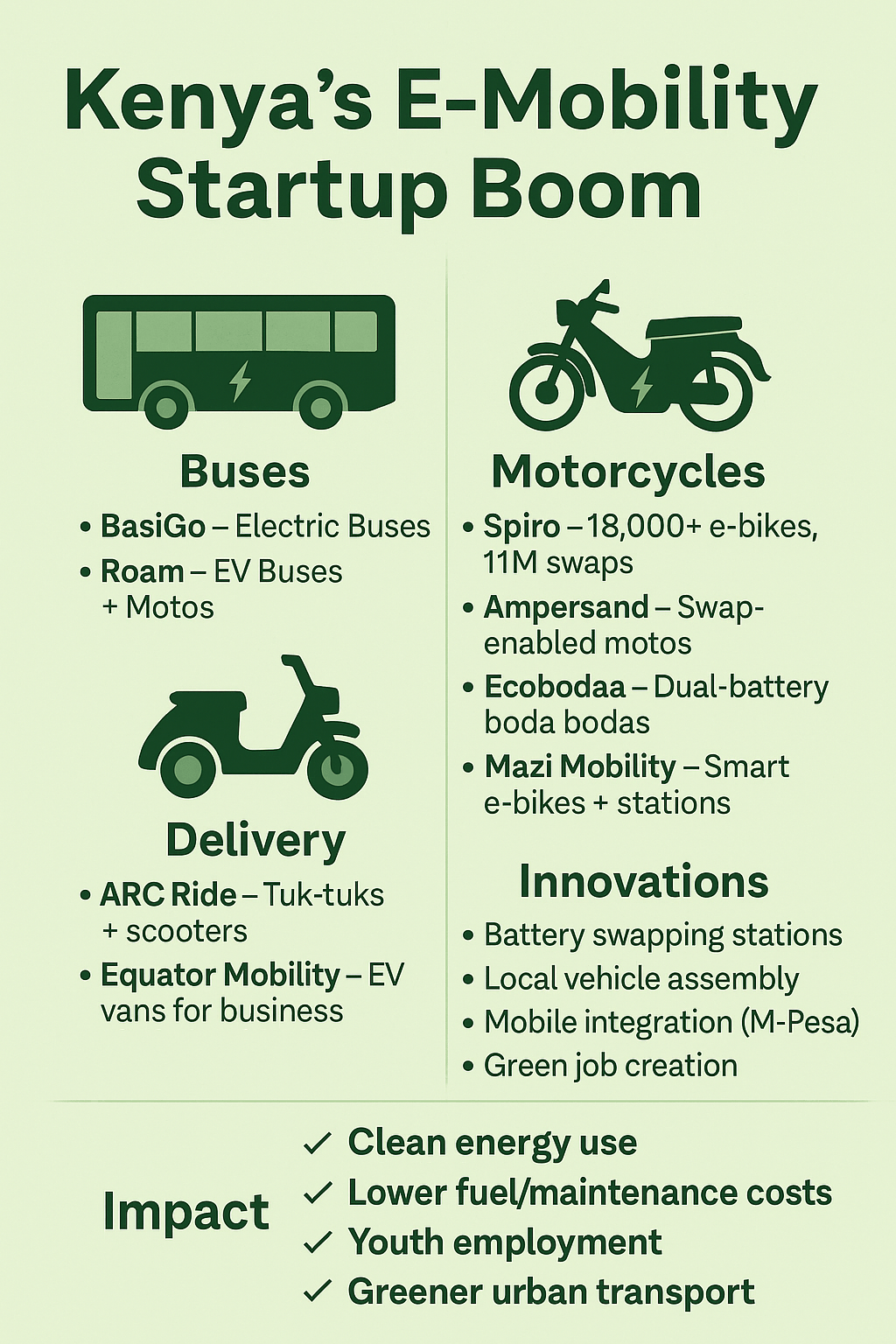
1. Electric Buses Startups are introducing locally assembled e-buses for public transit. This enhance cutting both emissions and running costs. Some companies offer leasing models with full maintenance support to ease adoption.
2. Electric Motorcycles (Boda Bodas)
Motorcycles are widely used in Kenya. Startups now offer electric versions with battery swapping options. This makes them cost-effective and convenient for boda riders.
3. Commercial Delivery EVs, Electric vans, tuk-tuks, and cargo bikes are being deployed for last-mile delivery. These are ideal for e-commerce and urban logistics companies aiming for green transport.
4. Battery Swapping & Charging
This is helping in reduction in time wasting. Instead of waiting hours to charge, riders can swap batteries in minutes at swap stations. This boosts productivity and ease of use.
5. Smart Systems & Mobile Integration
Most E-mobility services are integrated with mobile money like M-Pesa. This offers flexible rentals, leasing, and tracking options via apps.
The Leading E-Mobility Startups in Kenyan
The startups in Kenya are:
1. BasiGo
It’s main focus is Electric Buses. They assemble the buses locally. They operate on the basis of pay-as-you-drive model
2. Roam
The majorly focus on Motorcycles & buses. They offer African-designed EVs which are locally manufactured.
3. Ecobodaa
They deal with E-bikes for boda riders. Their main features is the use of Dual batteries and PAYGO model
4. Spiro
Their focus is Electric boda bodas. They deal with battery swaps
5. Ampersand
They focus on Swapping batteries for e-bikes. They are expansion into Nairobi
6. Mazi Mobility
They deal with Bodabodas charging batteries, Smart fleet & swap network
7. ARC Ride
They deal with EVs for delivery & rides, E-tuk-tuks and swap stations
8.Equator Mobility
They provide commercial EVs Vans, servicing, and EV leasing What’s
Conclusion and the Road Ahead
With continued support from the Kenyan government, international investors, and local communities, the e-mobility ecosystem is set to thrive. These startups are not just moving people, they’re reshaping the future of African transport. Kenya’s journey into clean, smart, and affordable mobility has just begun—and it’s electric.
 ChegzMad Consultancy
Leave a comment